Book Review
Denizlerin Fethi Çağı
Review of the book's research, sources, structure and accessible style.
Adil Hacıömeroğlu
Read ↗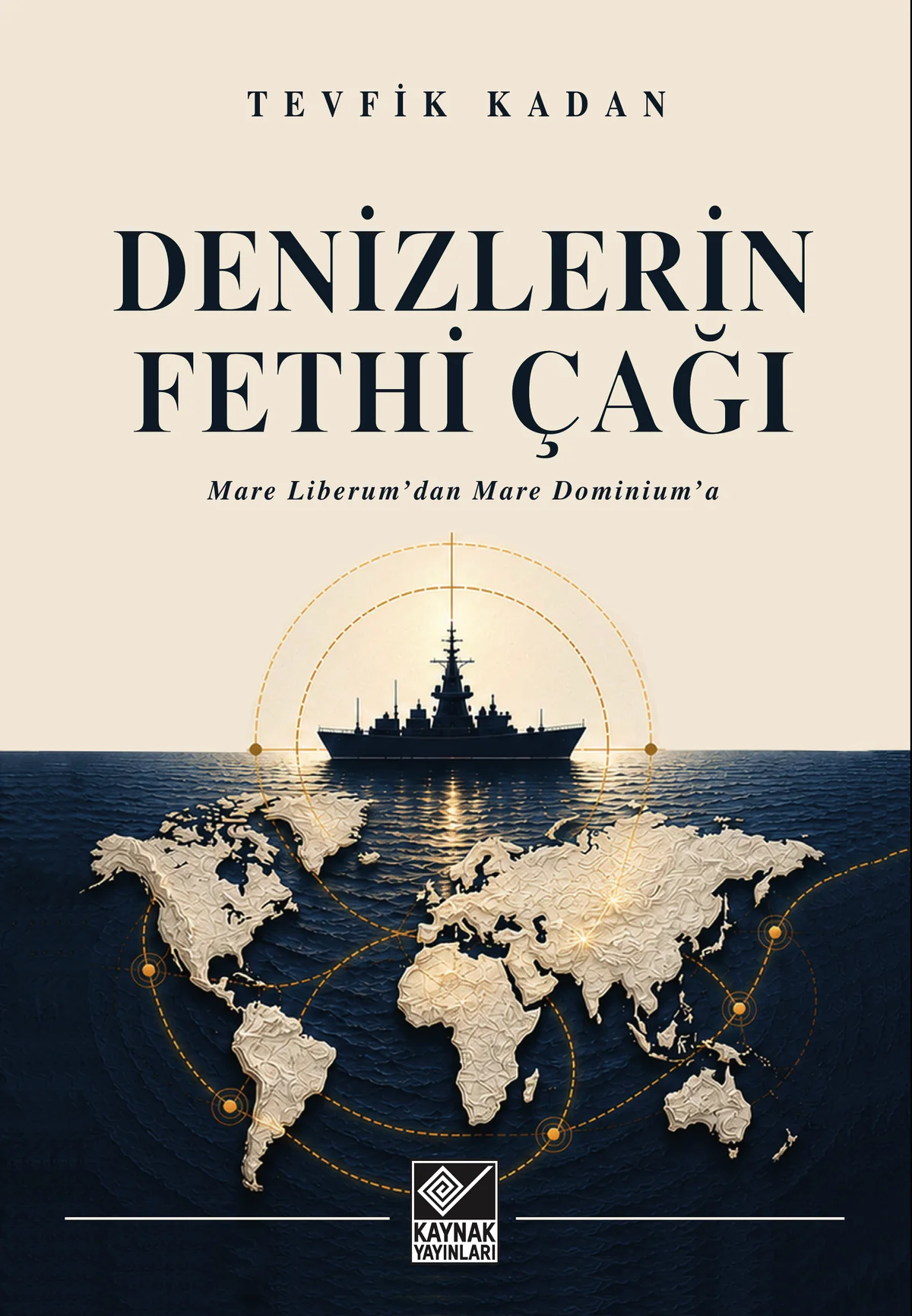
A study of whether maritime spaces can remain legally free while becoming increasingly controllable in practice through technology, armed power and strategic geography.
The book connects maritime law, sea power, global trade, technology, strategic chokepoints and the transition toward a multipolar order.
The freedom of the seas has never distributed power equally. States with superior naval mobility have used open maritime space for military access, surveillance, commerce and power projection on a far greater scale than weaker coastal states.
The expansion of territorial seas, continental shelves and EEZs can therefore also be read as stages in a long struggle over how much strategic freedom the open sea should provide to hegemonic maritime powers.
An Exclusive Economic Zone is not territorial sea. Coastal states do not possess full sovereignty there, and navigation freedoms remain. Yet in practice EEZs are increasingly treated as strategically sensitive spaces for resources, security, military activity and strategic depth.
The book describes this tendency as the strategic territorialization of maritime space.
Not necessarily ownership of the sea, but the capacity to establish effective maritime control.
Mare Dominium describes an emerging condition in which legal freedom may coexist with growing practical control. Persistent surveillance, satellites, unmanned systems, long-range precision strike and command of strategic chokepoints make it increasingly possible to monitor access, raise the cost of unwanted presence and constrain operational freedom.
The central question is therefore not whether the law of the sea disappears, but whether the physical conditions that once sustained maritime freedom are changing underneath it.
Verified reviews, interviews and media appearances related to Denizlerin Fethi Çağı and the Mare Dominium thesis.
The Australian Naval Institute features Tevfik Kadan’s Mare Dominium framework and the book’s argument on the transition from legal jurisdiction to strategic territorialisation and effective control.
Read at ANI ↗Journalist Feyziye Özberk examines the book in the context of changing maritime power, global trade and strategic competition.
Read the review ↗Review of the book's research, sources, structure and accessible style.
Unmanned systems, energy routes, Blue Homeland and maritime control.
An English-language discussion of the book’s central arguments and the international maritime order.
A wide-ranging interview on the book, maritime geopolitics and Mare Dominium.
Hormuz, the Turkish Straits, Montreux, MİLGEM and maritime power.
The book featured for maritime-sector readers.
Commentary on the book and the emerging global order at sea.
A video review and recommendation of the book.
Introduction to the book and its geopolitical thesis.
An interview on the deepest front of global power competition.
A public exchange connected with Türkiye’s maritime community.
A radio discussion of the book and the changing strategic order at sea.